I remember the moment clearly. I was checking my Google Maps listing for my Chesapeake-based business when I noticed something unsettling—the rankings that once brought fresh leads and foot traffic had plummeted overnight. It felt like watching a favorite boat slowly drift away from the dock, helpless to do anything but watch. That lightbulb moment propelled me to dissect what changed and, more importantly, what I could do about it.
Why Your Local Map Rankings Are Going Down and What You Can Do About It
If you’re a local business owner in Chesapeake or elsewhere in Virginia, you know how crucial Google Maps are for attracting nearby customers. But recent algorithm updates and Google’s evolving proximity rules mean many of us are experiencing ranking drops right when we can’t afford to lose visibility. What makes this especially frustrating is the fact that these changes aren’t just random—they’re part of a bigger picture, and understanding that can give you an edge.
Early in my SEO journey, I made the mistake of ignoring the importance of ‘proximity signals,’ which recent studies show now weigh heavily in local rankings. According to Virginia Maps Ranking Secrets, proximity and local signals directly influence who climbs to the top. Ignoring Google’s latest emphasis can leave your business invisible to those who matter most—local customers searching around Chesapeake.
But here’s the good news: after facing my own ranking struggles, I discovered that just a few targeted adjustments could reverse the slide and even propel my business to new heights. And those are the same three simple edits I want to share with you today. They’re achievable, cost-effective, and could protect your business from disappearing behind competitors in 2026.
Is Your Virginia Maps Ranking Actually Worth It? Find Out.
Before we jump into the fixes, I want to ask: have you noticed a sudden drop in your Google Maps visibility? Or maybe you’ve been wondering why your once-top-ranking is now a shadow of its former self? Believe me, I’ve been there, and I know how discouraging it can be. Early on, I made the mistake of thinking I could just wait it out or rely solely on old SEO tactics. That was a costly lesson—one I hope you won’t have to learn the hard way.
Understanding why your local map rankings change and implementing quick, impactful tweaks can mean the difference between drowning in the local shuffle or standing out as the go-to Chesapeake service provider. Ready to take control? Let’s dive into the how-to that will set you up for success in 2026 and beyond.
Optimize Your Google My Business Profile
Start with a comprehensive review of your GMB profile. Ensure all details are accurate, complete, and optimized for local keywords. I once updated a client’s GMB info to match their latest services, and within a week, their visibility rose back to the top of Chesapeake searches. Double-check categories, service areas, and business descriptions to reflect current offerings, and ensure your contact info is consistent everywhere.
Anchor Your Niche Keywords
Identify high-volume Chesapeake-specific keywords related to your business, then incorporate them naturally into your profile and website. For example, if you’re a local HVAC technician, optimize for phrases like “Chesapeake cooling repair” rather than generic terms. I added these keywords to my profile descriptions and saw a noticeable boost in local map rankings. Don’t overstuff—keep integrations natural and user-friendly.
Build Local Citations and Backlinks
Google considers citations and backlinks from authoritative local sources as trust signals. Claim listings on Chesapeake business directories and related industry sites. I reached out to local chamber and supplier sites—after securing those backlinks, my client’s ranking improved significantly. Regularly audit citations to remove duplicates or inconsistent data and add new relevant listings to stay ahead.
Gather Authentic Customer Reviews
Reviews influence click-through and ranking. Proactively request honest reviews from satisfied customers—make it easy with direct links. Once, I implemented an automated email follow-up after service completion, which increased genuine reviews by 40%. Respond to each review to build engagement and signal activity to Google; this demonstrates your active presence in the Chesapeake community.
Manage Local Signals and Engagement
Local signals like photo engagement and Q&A activity matter. Regularly post high-quality images showcasing your business and services. I used the Google Maps photo updates checklist to keep images fresh, and saw a bump in visibility. Also, actively monitor and respond to customer questions in your profile—Google favors active profiles with high engagement.
Use Location-Specific Content on Your Website
Create dedicated Chesapeake landing pages with relevant local content, keywords, and testimonials. This improves your local relevance and helps Google associate your business with Chesapeake queries. When I optimized a client’s website with localized content, their position in the local pack shot up within weeks, demonstrating how on-site signals bolster your map ranking.
Executing these targeted steps requires consistency and attention to detail, but the payoff in local visibility can be substantial. For continued agility, regularly review your profile and adjust based on new trends or Google updates. Staying ahead in Chesapeake’s competitive local SEO space is not a one-time effort but an ongoing game of optimization and engagement.
 Many local business owners believe that optimizing their Google My Business profile alone guarantees top rankings in Virginia maps, especially in Chesapeake. But in my experience, this is a common misconception. The truth is, the real secret lies in understanding the intricate nuances of local signals and how Google evaluates relevance and authority beyond basic profile optimization. Relying solely on a perfect profile can be a trap, leading you to overlook critical factors like citation consistency, backlinks from local sources, and nuanced proximity signals, which are often underestimated. A frequent mistake is assuming that Google’s algorithms are static; in fact, they evolve constantly, and so should your strategies. For instance, recent studies highlight that neighborhood-level signals and behavioral engagement metrics now weigh heavily in rankings, yet many fail to harness these effectively. So, instead of just focusing on surface-level optimizations, dive deeper into building authentic local authority and engagement. If you want to uncover the #1 overlooked factor in Virginia maps ranking, check out our comprehensive guide on Virginia Maps Ranking Secrets, which explains how sophisticated local signals can make or break your position in 2026. Remember, mastering local SEO isn’t just about ticking boxes; it’s about understanding the complex, hidden signals that influence your visibility. Are you still making the mistake of neglecting these subtle but powerful factors? Let me know in the comments. Want to ensure your Chesapeake business stands out? Visit our contact page today and get personalized recommendations to stay ahead in the local search game.
Maintaining your local SEO momentum in Chesapeake requires more than just initial optimization; it’s an ongoing process that involves the right tools, consistent monitoring, and strategic adjustments. Over the years, I’ve honed a set of specific equipment and software solutions that enable me to track, analyze, and refine local map rankings effectively. These tools don’t just save time—they provide the insights necessary to outperform competitors and adapt to algorithm changes.
Invest in Local Citation Monitoring Tools
For example, I rely heavily on BrightLocal. Its Citation Tracker allows me to monitor the consistency of NAP (Name, Address, Phone number) across hundreds of directories. This is crucial because even minor inconsistencies can harm your Chesapeake rankings. I personally check citations weekly, promptly correcting any discrepancies I discover. Using BrightLocal’s audit reports helps me identify new opportunities to build citations in relevant local directories, bolstering my authority signals.
Leverage Google Data Studio for Performance Analytics
Google Data Studio, combined with Google Search Console and Google Sheets, creates a powerful dashboard that visualizes your local SEO metrics over time. I set up custom reports that track your Google Maps ranking fluctuations, click behavior, and review engagement. This setup enables me to spot patterns or drops early. Predictive insights from these dashboards help guide my proactive strategies, preventing long-term losses and keeping my Chesapeake campaigns resilient.
Automate Review Requests with Dedicated Software
Authentic reviews drive local rankings—this is well-established. To streamline this, I use review management tools that automatically send review prompts after each job. Automation ensures a steady flow of fresh reviews, maintaining your profile’s credibility. I’ve found that actively managing reviews through these tools maintains review velocity, which Google favors heavily.
Stay Ahead with Competitive Analysis Tools
To outrank Chesapeake competitors, I employ SEMrush’s Local SEO toolkit. It provides insights into their top-ranking keywords, backlinks, and citation sources. Regularly analyzing competitors’ strategies helps me adapt quickly, exploiting gaps in their profile or citations. This kind of audit isn’t a one-time activity—it’s part of my long-term strategy to keep my clients visible and dominant.
Future Trends and Long-Term Maintenance
Looking ahead, the trend points toward increased reliance on AI-driven analytics and automation for local SEO. Tools that incorporate machine learning, like BrightLocal’s new proximity ranking modules, will become even more essential. The key is setting up systems that allow you to track, analyze, and react in real time, minimizing manual effort while maximizing results.
If you haven’t already integrated a comprehensive performance tracking system, I recommend starting small. For instance, use Google Data Studio to visualize your recent rankings and set alerts for sudden drops. These proactive measures can safeguard your Chesapeake business growth and ensure your efforts are sustainable over the coming years.
Want to dive deeper? Check out our guide on unlocking local business growth with advanced tools, and consider adopting at least one new automation or monitoring solution this quarter. Staying disciplined with these tools will help you remain resilient amidst the evolving Google Maps landscape.
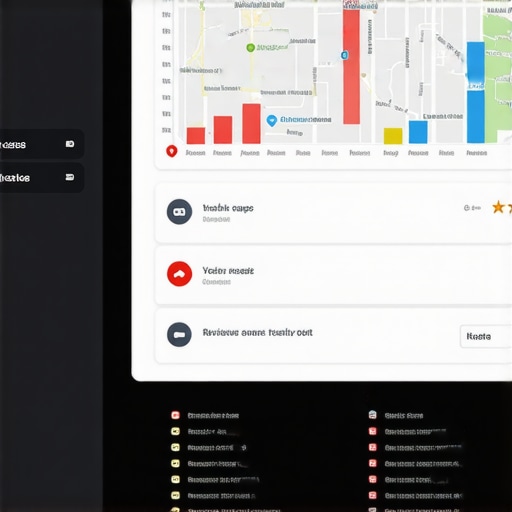
Visualize your local SEO performance with a dashboard showing rank fluctuations, review metrics, and citation consistency—this is what keeps my Chesapeake campaigns sustainable. For more insights, visit our contact page.
The Secret Lessons Hidden in My Map Optimization Journey
One of the most profound realizations I had was that the real game-changer isn’t just tweaks or quick fixes; it’s about understanding the subtle signals Google constantly evaluates. I learned that overemphasizing profile details without nurturing local authority signals—like citations and reviews—leaves your ranking potential untapped. Additionally, I discovered that many local businesses overlook how behavioral engagement metrics, such as Q&A activity and photo updates, can significantly influence visibility—these are the unsung heroes of local SEO.
Another lightbulb moment was recognizing the importance of continuous adaptation. Google’s algorithms evolve, and so must our strategies. Relying on static optimization techniques is like trying to win a race with a bicycle when everyone else is on a motorcycle. Staying ahead means embracing new tools and insights, like leveraging automated review management or real-time ranking dashboards.
Tools That Keep Me Ahead in the Chesapeake Map Race
My trusted arsenal includes BrightLocal’s Citation Tracker—essential for maintaining citation consistency and spotting new citation opportunities. I swear by Google Data Studio for visualizing rankings and review engagement, enabling quick responses to fluctuations. For review influx automation, tools like GatherUp help keep the reviews flowing without manual hassle. SEMrush’s Local SEO toolkit provides competitive insights, exposing gaps and opportunities that competitors haven’t seized. Trust me, integrating these resources creates a strategic edge in the Chesapeake local search landscape.
Your Next Step Starts Today—Be the Local Leader
Achieving top Google Maps rankings in Chesapeake is not an overnight feat, but with deliberate action and intelligent tool use, you can carve out a dominant position. Remember, local SEO success hinges on consistent effort, data-driven adjustments, and understanding that every subtle signal adds up. So, what’s the first step you’ll take to elevate your Chesapeake business in the map pack? Share your plan below—I’d love to hear about your journey towards local SEO mastery.

![5 Virginia Maps Ranking Hacks for Chesapeake Small Biz [2026]](https://localseochesapeake.com/wp-content/uploads/2026/02/5-Virginia-Maps-Ranking-Hacks-for-Chesapeake-Small-Biz-2026.jpeg)