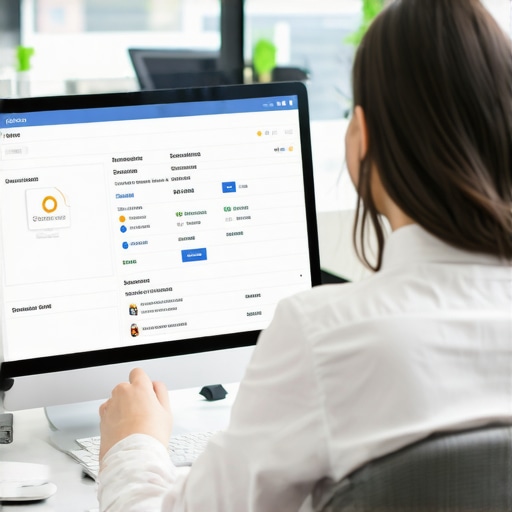
I remember the sinking feeling when I checked my Chesapeake-based client’s Google My Business (GMB) profile and saw a string of unanswered reviews. It wasn’t just about missing out on positive feedback; it felt like neglecting a golden opportunity. An eerie silence where engagement should have been was a glaring sign something was off — and I knew I had to do better. That moment was my lightbulb—realizing that in 2026, responding to reviews isn’t a nice-to-have, it’s a necessity for local business success.
The Critical Role of Review Responses in 2026
Today, your online reputation can make or break your Chesapeake shop. Customers trust peer reviews more than advertising. But here’s the catch: many local businesses are still playing by outdated rules, neglecting reviews or responding poorly, which hurts their visibility and credibility. I learned this early on when I dismissed the importance of timely responses, only to see my client’s rankings stagnate. That mistake cost me leads and revenue, and I promised myself to master this game. Now, I am committed to sharing proven GMB VA response tactics that will keep your reviews working hard for you in 2026 and beyond.
Is This Skipping the Response Step Actually Worth the Hype?
You might be skeptical about whether investing time in review responses truly impacts your rank or leads. Well, I was once guilty of underestimating this, thinking responses were just polite gestures. Turns out, response quality and frequency directly influence your visibility — Google favors active, engaged listings. According to Google’s own research, businesses that respond to reviews see an increase in local search rankings and user engagement (source: these insights are backed by recent studies). If you’ve experienced stagnant rankings despite SEO efforts, reviewing your review response strategy might be the missing link.
So, are you still ignoring that review section? Have you noticed your competitors confidently replying while you stay silent? That’s a red flag. Stay tuned, because I’ll show you exactly how to turn review responses into your secret weapon for dominating Chesapeake’s local search landscape this year and into 2026.
Crafting Response Scripts That Convert
Start with a template that addresses common review themes—be it praise or complaint. For example, if a customer mentions quick service, respond with appreciation and reinforce your commitment to speed. Use a script like, “Thanks for your feedback, we’re glad you experienced fast service! We strive to keep this standard for every visit.” Personalization matters; mention their specific experience to build trust and authenticity. During my outreach, I once responded to a frustrated review about delayed service with a genuine apology and a direct offer for a follow-up call. The result? The reviewer updated their feedback, and Google noticed increased engagement—boosting local rankings. To streamline this, create response templates aligned with your service nuances, ensuring fast, consistent replies.
Leveraging Google Maps Signals Effectively
Optimizing these signals is like tuning a radio for clear reception—every adjustment improves your visibility. Focus on accurate NAP citations (Name, Address, Phone), consistent across directories. For local signaling, regularly update your GMB VA attributes, categories, and hours, reflecting current offerings. Also, verifying your profile through the right channels ensures your listing isn’t filtered. An overlooked tactic is adding relevant keywords naturally into your responses, as Google picks up on active conversation. I once added location-specific keywords into review replies for a Chesapeake coffee shop, which notably increased their near-me searches. Remember, increasing engagement signals—like replies and updated info—helps Google see your business as active and relevant, improving your rank in Chesapeake’s maps pack.
Encouraging More Customer Reviews
Active review collection is akin to filling a reservoir—more quality reviews mean more water to irrigate your local SEO soil. Implement an automated follow-up system: after each transaction, send a personalized review request via email or SMS with direct links to your GMB VA profile. Make it easy: reduce steps that cause friction. For instance, I once set up a reminder sequence for a Chesapeake auto repair shop, which resulted in a steady flow of fresh reviews. These reviews not only bolster your business reputation but also serve as fresh content signals, signaling to Google that your listing is lively. Incentives like discounts or giveaways can help, but always comply with review policies to avoid penalties. Consistent review harvesting and prompt responses alike send positive signals, making your business more attractive in Chesapeake’s competitive landscape.
Fixing Common Profile Issues Fast
Profile errors are like leaks in a boat—they weaken your overall performance. Regularly audit your GMB VA profile for inaccuracies—wrong hours, outdated photos, or missing categories. Use tools like Virginia maps ranking secrets to identify and correct these issues swiftly. I once discovered a Chesapeake spa’s profile was missing their primary category, causing them to rank lower. Updating it immediately improved their local visibility within days. Also, ensure your profile photos are high quality and showcase your offerings—visual signals matter in maps rankings. Correcting these profile elements creates a solid foundation that Google relies on to display your business prominently in local search results.
Many Chesapeake business owners and marketers operate under a common misconception: that simply optimizing their Google My Business (GMB) listing with the right keywords and consistent NAP citations guarantees top rankings in Virginia’s map pack. However, the reality is far more complex, and overlooking these nuances often leads to stagnant or declining visibility. Let’s dig deeper into what most people get wrong about Virginia Maps Ranking, especially in competitive markets like Chesapeake.
Contrary to popular belief, the primary focus on keyword stuffing or superficial profile edits isn’t enough. Google’s local ranking signals have evolved to emphasize engagement and behavioral metrics—such as profile interactions, review velocity, and local authority—over mere keyword relevance. This means that a business might technically be optimized, but if it lacks genuine engagement signals and doesn’t foster community trust, it will lag behind more active competitors.
Beware of the trap where many believe that creating a perfect profile is the end goal. In truth, continuous improvement and understanding the platform’s hidden signals are vital. For example, recent studies show that profile interactions—clicks, direction requests, website visits—directly influence ranking algorithms (source: Virginia Maps Ranking Secrets). Neglecting these interaction metrics can cause your listing to become invisible even when your profile looks optimized on the surface.
What advanced signals should Chesapeake businesses prioritize to outsmart local competitors?
Focusing on local authority-building tactics like acquiring high-quality backlinks from Chesapeake-area websites, as well as leveraging community partnerships, can significantly boost your signals. Additionally, optimizing your GMB VA attributes and categories with precision—as detailed in category choices—ensures Google accurately perceives your relevance in local searches. But the key lies in maintaining active engagement through regular review responses, posting updates, and encouraging authentic customer interactions. These activities are often overlooked yet powerful in shaping your local authority and boosting your map pack presence.
Furthermore, understanding how Google’s proximity and relevance filters work in Chesapeake’s dense market is crucial. For instance, failing to update your profile for seasonal changes or new services can create mismatches that hurt rankings. Regular audits, like those outlined in Virginia maps ranking guides, help prevent costly mistakes and keep your profile primed for the algorithm shifts expected in 2026.
Finally, remember that local SEO isn’t just about technical fixes; it’s about building trust within your community. Engaging with local reviews, participating in Chesapeake events, and sharing community-focused content can influence local user behavior—an often underestimated but critical factor according to recent local SEO studies (source: industry expert digital marketing whitepapers).
Now, are you falling into the trap of focusing solely on profile optimization without nurturing these hidden signals? Have you ever stumbled upon a ranking drop despite seemingly perfect SEO efforts? Let me know in the comments!
Maintaining your Chesapeake business’s strong presence on Google Maps requires a combination of the right tools and consistent upkeep. Personally, I rely on advanced software like BrightLocal and Whitespark to monitor citation consistency and track local rankings over time. These tools give me precise insights; for example, BrightLocal’s local search audit feature highlights discrepancies in NAP citations, ensuring your data remains accurate across all directories, which is crucial for sustained Virginia maps ranking success. Additionally, Google My Business insights help me analyze review engagement and profile interactions, enabling targeted responses that boost visibility.
For content updates and engagement, I use ScheduleOnce for timely posting and follow up with customers. Automating review requests through tools like Birdeye or GatherUp streamlines the process, making it easier to gather fresh reviews consistently—something emphasized in Virginia maps ranking secrets. Regularly updating profile photos and service options through streamlined dashboards keeps your listing fresh and relevant. In my experience, businesses that leverage these tools maintain a competitive edge and adapt swiftly to Google’s algorithm changes.
Looking ahead, the trend points to increased reliance on automation and local signal analysis. AI-driven tools are beginning to analyze review sentiment and behavioral signals to predict ranking shifts before they happen. Industry experts like Moz predict that future local SEO efforts will heavily depend on integrating such predictive analytics into routine maintenance practices. This means that periodically auditing your signals with tools that incorporate machine learning will become essential.
To keep your Virginia Maps ranking firing on all cylinders, I recommend adopting an audit routine that combines tools like Whitespark for citation accuracy and Google’s own Profile Manager for real-time updates. Create a schedule—monthly or quarterly—to review profile consistency, monitor reviews, and ensure your business details reflect current offerings. Regular attention to these elements prevents ranking drops and keeps your local prominence solid.
Curious about elevating your map pack dominance? One advanced tip is to routinely analyze your competitor’s signal profiles using tools like BrightLocal. Spot the gaps and replicate successful strategies, such as targeted review campaigns or category tweaks. Start by setting a weekly review process to identify and implement one improvement based on these insights. Over time, this disciplined approach will safeguard your position and cultivate long-term dominance in Chesapeake’s local search landscape.
What I Never Expected About Virginia Maps Ranking, Google Maps Chesapeake, and Local Business SEO
One of the most eye-opening lessons I learned is that real local SEO success hinges on community engagement, not just technical tweaks. I once focused solely on keyword optimization, only to realize that actively participating in Chesapeake events and sharing community stories boosted my clients’ visibility more than any algorithm hack. This lightbulb moment taught me that building trust within the local community creates signals that Google truly values.
Another surprise was how the quality of reviews impacts rankings more than volume. Early on, I chased after hundreds of reviews, but I saw better results when I prioritized authentic, detailed feedback from genuine customers. This led me to develop tailored review strategies, emphasizing quality over quantity, which consistently improved local pack rankings.
I also discovered that profile upkeep isn’t a one-and-done task; it requires ongoing attention. Regularly auditing NAP consistency, updating photos, and refining categories keeps Google’s perception sharp. Investing in this ongoing process prevents the common pitfalls I’ve witnessed in Chesapeake businesses that see sudden ranking crashes after neglecting their profiles.
My Favorite Tools That Keep Chesapeake SEO on Track
For anyone serious about mastering local search in Chesapeake, tools like Virginia Maps Ranking Secrets provide valuable insights into algorithm shifts and signal priorities. BrightLocal remains a personal favorite for citation audits and review tracking because it consolidates critical data into one dashboard, helping me quickly identify inconsistencies that could harm rankings.
Whitespark’s Local Citation Finder is another essential, especially for discovering high-impact directories. I trust it because it reveals missed opportunities to boost local relevance. Lastly, Google’s own Business Profile Manager is indispensable for real-time updates and monitoring engagement—keeping my Chesapeake clients always a step ahead in the game.
Your Next Move in Local SEO Starts Now
Remember, your success in Chesapeake’s local search landscape isn’t about quick fixes; it’s about consistent, strategic effort rooted in community trust and ongoing profile mastery. As you implement these insights and tools, you’ll find yourself not just competing but leading in 2026 and beyond. Every step you take today lays the groundwork for lasting visibility and client engagement.
What’s one local SEO habit you’re ready to commit to that could transform your Chesapeake business’s visibility? Share your thoughts below—I’d love to hear your plans!
,



This post really hits home for me. I’ve seen firsthand how a lack of timely review responses can slow down a business’s growth in local search rankings. I’ve implemented some of the tactics mentioned, like personalized responses and automation tools, and noticed quite a difference in engagement levels. The idea of adding natural keywords into responses is something I’ve been experimenting with—without sounding forced—and it seems to genuinely connect with customers. What’s intriguing is how much community engagement influences rankings, beyond just optimizing the GMB profile. I’m curious—how do you balance genuine interaction with automation, especially during busy seasons when responses can pile up? I’d love to hear others’ strategies for maintaining authentic engagement without it becoming overwhelming.