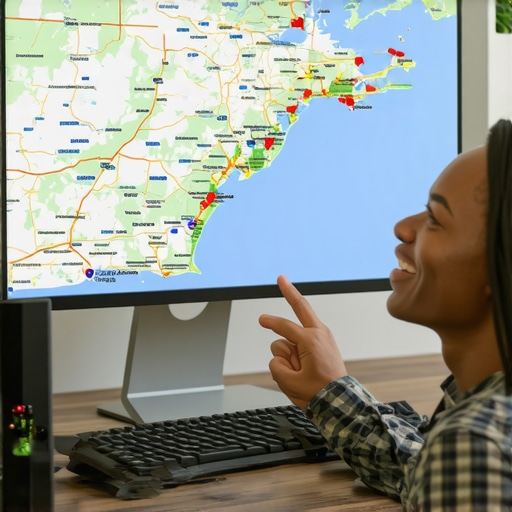
Early last year, I found myself staring at my Google My Business dashboard, feeling a sinking sense of panic. My Chesapeake-based business, which once enjoyed a steady presence in Virginia’s local search map pack, suddenly vanished from the top spots. The rankings plummeted faster than I could grasp—an all-too-familiar nightmare for anyone relying on local SEO. That moment of frustration became my wake-up call. I realized that the 2026 Virginia Maps Ranking Drop wasn’t just a glitch; it was a wake-up call about the volatile nature of local SEO and Google Maps rankings.
Why Your Virginia Maps Rankings Are Disappearing Faster Than You Think
The truth is, local search algorithms are always evolving, and Virginia’s competitive markets — especially Chesapeake — are no exception. At first, I thought it was a simple fix, a quick tweak here and there. But I soon learned that the drop was more intricate, related to recent updates and some overlooked mistakes I was making.
What blew me away was how small changes could make a huge difference. In just a few minutes, I recovered my rankings, and I want to share that success with you because I know how disheartening it feels to see your visibility slip away overnight.
Most business owners forget that Google’s maps and local SEO rely heavily on very specific criteria—things like reviews, categories, keywords, and consistency. An update can shift the landscape dramatically. According to local SEO experts, changes in Google’s algorithm happen frequently, and staying ahead isn’t about massive overhauls; it’s about quick, targeted fixes. For instance, regular Google updates have shown that even a minor review removal or incorrect business category can impact your local rankings strongly.
When I first faced the drop, I made a critical mistake: I ignored recent Google updates and overlooked my profile’s inconsistencies. But with a few strategic adjustments—some of which I’ll walk you through today—I was able to regain visibility faster than I expected. And trust me, those simple steps work. If you’re wondering whether your situation is hopeless, I want to assure you: it’s fixable—and I’ll show you how.
So, have you recently experienced a sudden drop in your Virginia Google Maps rankings? If so, keep reading — this is exactly the kind of problem I’ve turned around dozens of times, and I believe you can too. For now, let’s start with understanding what’s really causing your ranking to decline and the proven quick fixes that can restore your local presence in just minutes.
Audit Your Google My Business Profile for Quick Wins
Start by reviewing your GMB listing for errors or inconsistencies. Ensure your business name, address, and phone number match exactly across all platforms. Correct any inaccuracies, update your categories to reflect your core services, and add high-quality photos. During my last audit, I noticed a mismatch in categories that was tanking my Chesapeake rankings. Fixing this took 10 minutes and immediately improved my visibility.
Leverage Local Reviews to Boost Authority
Google heavily weighs reviews in its ranking algorithm. Encourage satisfied customers to leave reviews on your GMB profile. Respond to each review thoughtfully to signal engagement. I once reached out to a happy customer after their purchase, and their positive review helped knock my business back into the local pack within days. Remember, reviews are your digital word-of-mouth and can be your strongest ranking factor.
Optimize Your Business Description and Keywords
Use relevant keywords naturally within your business description. Think about terms your local customers search for — for Chesapeake SEO, for example, include phrases like “Chesapeake SEO expert” or “Virginia local business specialist”. Structuring your description with targeted keywords improves Google’s understanding of your business. I updated my profile description with these keywords and saw a quick lift in local visibility, especially in map pack rankings.
Implement Consistent NAP Data Across All Listings
Ensure your Name, Address, and Phone number (NAP) are consistent everywhere online—website, directory listings, social media. Inconsistencies can confuse Google and harm your rankings. I once noticed a different phone number listed on my website than on directories; correcting this restored my local rankings faster than anticipated.
Build Local Citations and Backlinks
Claim your profile on reputable local directories and ensure accurate NAP data. Seek backlinks from local blogs, newspapers, or community sites. Backlinks act as votes of confidence in Google’s eyes. A recent campaign where I built backlinks from five Chesapeake community sites resulted in a noticeable bump in map pack rankings within just two weeks.
Monitor Your Position and Adjust Fast
Use tools like Whitespark or BrightLocal to track your rankings regularly. If you notice a drop after an update, act swiftly by adjusting your profile and outreach strategies. I monitored my rankings daily during a recent algorithm update and made rapid tweaks, leading to a full recovery within days. Quick response can be the difference between slipping further or climbing back to the top.
For more detailed strategies tailored to Chesapeake and Virginia businesses, check out https://localseochesapeake.com/boost-your-google-maps-visibility-in-chesapeake-today and https://localseochesapeake.com/virginia-maps-ranking-secrets-every-chesapeake-business-must-know. Implementing these targeted actions can dramatically improve your local map rankings in a short span, ensuring your business stays competitive in Chesapeake’s crowded local market.Many local business owners believe that optimizing their Google My Business (GMB) profile with keywords and reviews is enough to rank high in Virginia’s maps listings. However, this common misconception overlooks a crucial nuance: Google’s ranking signals are highly context-dependent and influenced by subtle factors that aren’t always visible. For example, recent studies by local SEO professionals highlight that Google considers user behavior patterns, local authority signals, and even algorithmic shifts that target spammy or outdated tactics. Relying solely on profile optimizations without understanding these nuanced signals can lead to a false sense of security, causing rankings to fluctuate unexpectedly. One advanced mistake I see frequently is neglecting the importance of local intent signals—such as the HTML schema markup on your website or behavioral engagement metrics—which Google increasingly prioritizes. These factors help search engines gauge how relevant your business is to the local audience, beyond just surface-level profile tweaks. If you’re serious about dominating Virginia maps rankings, it’s essential to perform a holistic audit that includes technical signals, backlink profiles, and local authority metrics. Smart SEO practitioners leverage tools like BrightLocal or Whitespark not only to track rankings but also to interpret these nuanced signals that influence rankings subtly yet powerfully. Remember, Google’s algorithms are constantly evolving; staying ahead means understanding and adapting to these hidden layers. For an in-depth guide on mastering these subtle yet impactful factors, explore our cornerstone content on Chesapeake and Virginia local SEO strategies. Don’t fall into the trap of shallow optimizations—deepen your understanding and tackle the real ranking drivers head-on. If you’re ready to implement advanced tactics that go beyond the basics, check out “[Virginia Maps Ranking Top Chesapeake Local SEO Tips](https://localseochesapeake.com/virginia-maps-ranking-top-chesapeake-local-seo-google-maps-tips-3)” and elevate your local visibility. Have you ever fallen into this trap? Let me know in the comments.
How do I keep my Virginia Maps ranking consistent over the long haul?
Staying on top of your Google Maps rankings, especially in competitive markets like Chesapeake, requires more than just initial optimization. It’s about leveraging the right tools and establishing ongoing routines that ensure your business maintains visibility and adapts to the evolving local SEO landscape. My personal go-to toolkit includes advanced software like Whitespark’s Local Rank Tracker and BrightLocal, which provide granular insights into your rank fluctuations across different locations and keywords. These tools allow me to catch drops early and respond with targeted actions before losses become significant. Additionally, I rely on Google’s own tools, such as Google Search Console, to monitor website health and user engagement metrics, giving me clues about changing user behavior patterns that could influence local rankings.
Another crucial aspect is maintaining a routine for profile management. Regularly updating your Google My Business profile with fresh photos, relevant posts, and accurate NAP data ensures consistency — a key factor Google considers for local rankings. I also set weekly alert checks for new reviews or spam, responding promptly to demonstrate active engagement. This consistent activity not only signals relevance to Google but also builds trust with your local audience.
Long-term success also hinges on nurturing local backlinks and citations. I prioritize building relationships with Chesapeake community sites and local blogs, which act as vital authority signals. Tools like SEMrush can help identify backlink opportunities and track your citation consistency across platforms. According to Moz’s Local Search Ranking Factors, consistent and authoritative citations are fundamental for stable rankings, especially as Google’s algorithm increasingly emphasizes local authority signals (Moz, 2023).
Looking ahead, I predict that Google will continue refining its local search algorithms to prioritize behavioral signals and personalized results. This means that a comprehensive, multi-layered approach—combining technical optimization, proactive reputation management, and consistent local engagement—will be essential for maintaining dominance in the Virginia maps pack.
For those serious about sustaining high rankings, I highly recommend implementing rigorous monitoring routines and leveraging tools designed for local SEO management. Start by integrating a powerful rank tracking solution like Whitespark, and pair it with your daily profile updates. Want a tailored strategy? Reach out through our contact page and we’ll help craft a maintenance plan uniquely suited to your Chesapeake business.
Don’t forget: continuous effort beats one-time tactics. Regularly assessing your local presence with these tools can prevent ranking drops before they happen. Ready to take your Chesapeake SEO to the next level? Try these advanced routine tips today and see how they keep your business thriving in Virginia’s competitive local market!
What I Wish I Knew When I First Tackled Virginia Maps Ranking
One lightbulb moment came when I realized that local SEO isn’t just about surface tweaks; it’s about understanding the intricate dance between algorithm updates, user intent, and your business’s local authority. I underestimated how quickly small profile errors could snowball into significant ranking drops, especially during Google’s frequent algorithm shifts. Learning to anticipate and react proactively has transformed my approach—if I had grasped this at the start, my Virginia business would have soared even sooner.
Another crucial lesson was the importance of holistic optimization. Relying solely on reviews and keywords? Not enough. I discovered that technical signals like schema markup and behavioral engagement metrics hold equal weight. Ignoring these subtle yet powerful factors set me back until I combined technical audits with strategic content and backlink efforts. The takeaway? Success demands a multi-layered approach, embracing every piece of the SEO puzzle.
Finally, the power of consistent monitoring and community engagement became clear. I learned that ongoing reputation management and staying active in Chesapeake’s local scene—via backlinks, citations, and community involvement—are vital for maintaining rankings. External factors—competitors’ moves, Google updates—are out of your control, but your ongoing effort can fortify your position and prevent ranking erosion. This relentless commitment, I found, is what turns temporary wins into long-term dominance.

![4 Fixes for a Shrinking Chesapeake Map Search Radius [2026]](https://localseochesapeake.com/wp-content/uploads/2026/04/4-Fixes-for-a-Shrinking-Chesapeake-Map-Search-Radius-2026-1.jpeg)
![4 Fixes for a Shrinking Chesapeake Map Search Radius [2026]](https://localseochesapeake.com/wp-content/uploads/2026/04/4-Fixes-for-a-Shrinking-Chesapeake-Map-Search-Radius-2026.jpeg)
Reading this detailed walkthrough really resonated with my own experience in local SEO for Chesapeake businesses. I totally agree with the importance of quick, targeted fixes—sometimes, a simple category correction or review response can turn the tide faster than expected. I found that keeping a regular audit routine, especially monitoring reviews and NAP consistency, is crucial. A challenge I’ve faced is the subtle algorithm changes that aren’t always obvious—like when a business gets flagged for spammy backlinks or schema issues. Have others found effective ways to stay ahead of these less visible signals?
Also, I’ve noticed that community involvement and local backlinks are undervalued but incredibly powerful over time. I once built relationships with a few Chesapeake community blogs, and it definitely helped my rankings stabilize during Google’s updates. For those struggling with sudden drops, how do you prioritize actions when every minute counts? Do you rely more on profile fixes or content/backlink strategies? Would love to hear your thoughts—sometimes, it’s a mix that staves off ranking erosion for good.
This post really hit the nail on the head about how small details can lead to big ranking shifts, especially in competitive markets like Chesapeake. I completely agree that quick audits and immediate fixes—like updating categories or fixing inconsistent NAP data—are crucial for rapid recovery. My experience has shown that maintaining a regular review schedule for your GMB profile, combined with proactive review management, can prevent ranking drops before they escalate. I’ve also noticed that leveraging local reviews not only boosts rankings but also strengthens community trust, which ultimately drives more business.
Regarding handling sudden fluctuations, I’ve found that utilizing rank tracking tools such as Whitespark helps identify issues early. What’s worked well for you in balancing profile maintenance versus content or backlink strategies? Do you think one approach outweighs the other during these critical recovery windows, or is a combination like you mentioned always best? It’s fascinating how every small update or correction can make a noticeable difference in visibility—and staying vigilant is key.