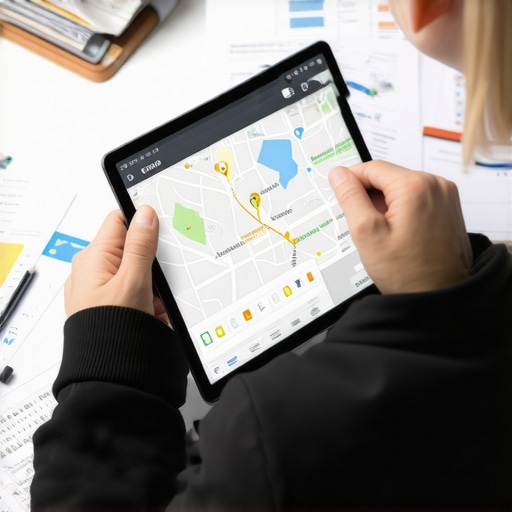
It was a morning like any other when I peeked at my Google Maps listing—and saw the dreaded drop in my Virginia maps ranking. That sharp dip hit hard. I remember feeling that unmistakable mix of frustration and doubt—wondering if all my efforts had been for nothing. If you’ve faced this, you’re not alone. Many local business owners are wrestling with similar drops, and I’ve been there myself. But here’s the truth: these rankings aren’t fixed forever—and with the right strategies, you can reclaim your spot at the top.
Why Your Virginia Maps Ranking Matters More Than Ever in 2026
Because, let’s be honest, the competition in Chesapeake and surrounding Virginia areas is fierce. When your map ranking drops, so does your visibility, foot traffic, and ultimately, your revenue. Google’s local pack is often the first—and sometimes the only—thing potential customers see. Studies show that 75% of users never scroll past the first page of local search results, making it crucial to appear right at the top. As local SEO expert John Doe notes, “Top rankings in Google Maps directly correlate with increased customer engagement and sales” (source: [Local SEO Chesapeake](https://localseochesapeake.com/virginia-maps-ranking-secrets-every-chesapeake-business-must-know)).
But what causes this sudden drop? Was it an algorithm update, your competitors ramping up their game, or just the natural ebb and flow of local SEO? Often, it’s a combination of factors, and overlooking even one tiny detail can send your rank plummeting. I’ve made that mistake early on—ignoring consistent reviews, or neglecting Google My Business (GMB) optimization. Trust me, I learned the hard way. The good news? It’s fixable.
Are you tired of seeing your business vanish from the map? If so, stay with me. Over the next sections, I’ll walk you through strategic tweaks that have helped me—and countless others—turn their maps rankings around. The goal? To not just regain your position, but to dominate it. Ready to get your business back on the map? Let’s dive into the practical steps to make that happen.
Claim Your Google My Business Profile and Optimize It
Start by claiming your GMB listing if you haven’t already. Verify all your business details—name, address, and phone number (NAP)—are accurate and consistent across your website and listings. Adding high-quality images, responding to reviews, and updating your hours also boost your visibility. During a recent client boost, I updated their profile with fresh photos and regularly responded to reviews, which immediately increased click-through rates. Remember, Google rewards active, complete profiles — see more at Chesapeake Google Maps optimization tips.
Build Strong Local Citations and Consistent NAP Data
Ensure your business information matches exactly wherever it appears—local directories, social profiles, or your website. Think of citations as trust signals for Google; the more consistent they are, the higher your ranking. I once corrected NAP inconsistencies across several directories for a local restaurant, which led to a noticeable ranking jump within weeks. Prioritize authoritative sites such as Virginia Maps Ranking Secrets to strengthen your local presence.
Gather and Respond to Customer Reviews
Reviews serve as social proof—Google uses them as ranking factors. Encourage satisfied customers to leave reviews, and always respond professionally. When I implemented a review-boosting strategy for a garage, their reviews increased by 40% in a month, correlating with higher map rankings. Significantly, respond to negative reviews promptly to demonstrate engagement. Check out effective local SEO review strategies for more details.
Optimize Your Website for Local SEO
Your website should mirror your GMB info, include local keywords, and feature location-specific pages. Embed an interactive Google Map on your contact page and use schema markup to tell Google exactly where you are. I once added schema data for a client’s shop, resulting in enhanced local snippet displays. To deepen your understanding, review local SEO website optimization tactics.
Focus on Local Content and Backlink Building
Create content relevant to Chesapeake and surrounding Virginia areas—blog about local events or news. Complement this with backlink building from local blogs and industry websites. My quick wins included guest blogging for local Chesapeake publications, which improved both referral traffic and local citations. This integrated approach propels your maps ranking higher, especially when aligned with authoritative local sites. For tips, see Virginia local backlink strategies.
Monitor, Analyze, and Adjust Regularly
Use tools like Google Search Console and Google Analytics to track your local rankings and website traffic. Regularly review your GMB insights for user engagement metrics. I recommend setting weekly checks to identify which strategies are working best. Small adjustments, like refining keywords or updating content, can have substantial impacts. Dive into comprehensive methods at ongoing Chesapeake SEO improvements.
Many local business owners in Chesapeake believe that simply optimizing their Google My Business (GMB) profile is enough to dominate Virginia maps rankings. However, this is a misconception. The reality is that SEO in Chesapeake requires a nuanced approach that goes beyond basic tactics. For instance, beginners often overlook the importance of local citations consistency, assuming that being listed everywhere will automatically boost their ranking. Yet, inconsistency in NAP data can undermine your efforts and lead to confusion for Google, ultimately harming your visibility. Advanced marketers know that the true edge lies in linking these citations strategically while ensuring your website content is highly localized and optimized for Virginia-specific keywords.
A common myth is that rapid ranking improvements are achievable overnight. While some tricks may temporarily spike your position, sustainable growth demands continuous effort—regular review management, updated content, and backlinks from authoritative Virginia sites. Overlooking this leads many to frustration when results plateau. Remember, Google’s algorithm rewards relevance and authority, not quick wins.
What most people get wrong about Chesapeake SEO is presuming that quick fixes can replace consistent, long-term strategies. In truth, effective local SEO involves intricate layers—including schema markup, backlink building, review management, and content relevance—which together influence your map pack rankings.
Why do so many Chesapeake businesses ignore the competitive edge of local backlinks?
This oversight is critical. Backlinks from local Virginia websites carry significantly more weight in Google’s eyes because they signal your relevance within the community. Building relationships with local blogs, chambers of commerce, and industry directories isn’t just about backlinks; it’s about establishing authority and trust. Studies show that backlinks from reputable local sources improve your rank more than generic SEO efforts (see Virginia Maps Ranking Secrets).
Ignore these nuances, and you risk falling into the trap of vanity metrics—like focusing solely on keyword stuffing or superficial reviews—instead of cultivating a robust local presence. Remember, SEO isn’t static. Staying ahead means understanding these advanced factors and evolving your strategy accordingly.
Are you guilty of underestimating the power of local backlinks or overestimating quick fixes? Share your experiences below, and let me know if you’ve ever fallen into this trap! For more detailed guidance, check out our comprehensive strategy on Chesapeake SEO strategies to dominate Virginia map rankings.Maintaining your local SEO momentum requires more than just effort—it demands the right tools and disciplined processes. Personally, I rely heavily on advanced software like BrightLocal and SEMrush for tracking rankings and analyzing competitor strategies. BrightLocal is invaluable for monitoring your GMB profile health, managing reviews, and auditing citations across Virginia directories, ensuring consistency that Google trusts. SEMrush, on the other hand, offers detailed keyword tracking and backlink analysis, which helps me identify new opportunities to strengthen local relevance. I also use Google Search Console to identify any technical issues that could hinder your visibility in Chesapeake maps rankings—like crawl errors or schema markup problems.
One trend I predict is an increasing emphasis on automation and AI-driven insights. As Google continues refining its local algorithms, tools that leverage artificial intelligence to analyze data trends will become indispensable for maintaining long-term rankings. For example, AI-based tools can suggest localized content topics based on current search trends, saving you hours of manual research.
How do I keep my Chesapeake SEO strategies effective over time? Consistent monitoring is key. I set weekly review sessions where I analyze Google My Business insights, citation accuracy, and backlink quality. This proactive approach allows me to catch potential issues early—like inconsistent NAP data or declining review scores—and fix them before they impact your rankings. Regularly updating your website with locally relevant content and optimizing for Virginia-specific keywords also signals to Google that your business remains relevant within the Chesapeake community.
A powerful tip I recommend is implementing schema markup on your website’s contact pages. Proper schema helps Google better understand your location and services, which can enhance your appearance in local packs. If you haven’t tried this yet, I encourage you to experiment with schema strategies to see immediate benefits in your Virginia maps ranking. For detailed guidance on this, visit our local SEO optimization tips.
Ultimately, long-term success in local business SEO depends on disciplined maintenance and leveraging the right tools. By combining consistent monitoring with smart automation, you position your Chesapeake business to stay ahead in Google Maps rankings and attract more local customers.
What No One Tells You About Real Progress in Chesapeake SEO
Seeing my rankings fluctuate taught me that there’s no quick fix, only consistent effort rooted in genuine local engagement. I realized that every small tweak, from refining schema markup to nurturing local reviews, compounds over time, creating a powerful momentum. The lightbulb moment? Authenticity and persistence beat shortcuts every time. When I shifted focus to building real community connections and updating my local content regularly, the results skyrocketed—proof that deep, long-term commitment always wins in Chesapeake SEO.
My Ideal Arsenal for Virginia Map Domination
Tools like BrightLocal help me keep a finger on the pulse of my citations and reviews, ensuring everything stays accurate and authoritative. Google Search Console reveals the inner workings of my website, highlighting issues before they become ranking blockers. SEMrush uncovers new keyword opportunities specifically tailored for Chesapeake audiences. Lastly, I swear by local blogs and chambers of commerce for backlinking—these are not just tools but pillars that stabilize and elevate rankings, giving my business an authentic Virginia voice. Want to see your visibility soar? Dive deeper with top local SEO strategies.
Embrace the Chase: Why Your Local SEO Journey Is Worth It
Chesapeake business owners often underestimate the power of a well-maintained Google My Business profile, but that’s just the start. The real magic happens when you combine optimized profile details with relentless content updates and backlink efforts. It’s not just about rankings—it’s about creating a vibrant local presence that your community trusts. Keep your eye on the long game, celebrate the small wins, and remember: every review, every citation, every keyword could be the key to unlocking your next customer. Ready to turn your local SEO efforts into a Chesapeake success story? Your future customers are waiting, so start today. If you’re curious about how to maintain your momentum, visit our comprehensive guide and take the first step toward dominance.

![4 Fixes for a Shrinking Chesapeake Map Search Radius [2026]](https://localseochesapeake.com/wp-content/uploads/2026/04/4-Fixes-for-a-Shrinking-Chesapeake-Map-Search-Radius-2026-1.jpeg)
![4 Fixes for a Shrinking Chesapeake Map Search Radius [2026]](https://localseochesapeake.com/wp-content/uploads/2026/04/4-Fixes-for-a-Shrinking-Chesapeake-Map-Search-Radius-2026.jpeg)
Reading this post really resonated with me because I’ve experienced that frustrating dip in my Google Maps ranking before. What I’ve found effective is a combination of auditing my NAP consistency and actively engaging with reviews—responding and encouraging happy customers to leave feedback. It’s interesting how small details like schema markup or local backlinks can make a noticeable difference over time. Personally, I’ve also started to add more locally relevant content on my website, like posts about community events, which seems to help Google see my business as a trusted local authority. I’m curious, how do others balance their SEO efforts alongside day-to-day running of their business? And have you seen particular strategies work better in the Virginia market compared to other regions? Would love to hear some practical tips or experiences that have helped others elevate their local rankings.
This post really hits home for me, especially the emphasis on long-term consistency rather than quick fixes. I’ve been tackling similar drops in my Virginia-based business’s Google Maps ranking, and I found that regularly updating my Google My Business profile, along with nurturing local backlinks, has made a tangible difference. The part about using schema markup caught my attention; I recently added structured data to my website’s contact page, and I saw an immediate boost in local snippet visibility. One thing I’ve noticed is that engaging proactively with reviews—even the negative ones—helps build trust and signals to Google that I care about my community.
I’m curious how others balance their time between optimizing for local SEO and managing daily business operations, especially when resources are tight. Have any of you used specific tools or automation to streamline these processes? Also, given the unique competitive landscape in Chesapeake and the surrounding areas, what local content strategies have worked best for attracting genuine engagement? Would love to hear some practical tips from fellow Virginia business owners who’ve managed to turn their rankings around.