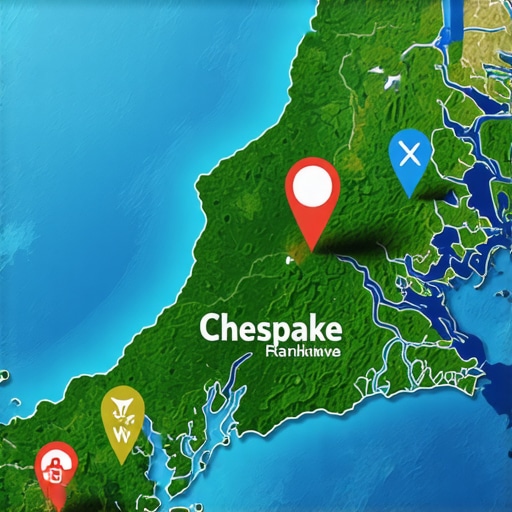
I remember the frustration vividly. I had poured hours into my Chesapeake-based business website, optimizing every word and image, only to realize my Google Maps listing was nowhere to be found when local customers searched for my services. It was a lightbulb moment—my online visibility was almost invisible without proper local SEO tactics. If you’ve faced the same struggle, you’re not alone. But here’s the good news: there are clear, effective strategies to get your business seen on Google Maps, and I’m here to walk you through them.
Why Local Map Rankings Could Make or Break Your Chesapeake Business
Think about the last time you needed a local service—maybe a plumber, a restaurant, or a retail shop. Did you scroll past the first few options, or did you go straight to the map pack? According to recent studies, over 75% of users never scroll past the first page of local search results, and the top three Google Maps listings get the lion’s share of clicks. That’s why ranking high on Google Maps isn’t just a bonus—it’s a necessity for local success. If your business isn’t showing up in those coveted spots, you’re essentially invisible to most potential customers. This is especially critical in Chesapeake, where local competition is fierce and first impressions are made online.
Is Google Maps Optimization Really Worth the Effort?
I used to think that just having a Google My Business (GMB) profile was enough. I made the mistake of setting it and forgetting it, assuming the rankings would come naturally. Spoiler alert: they didn’t. Early on, I ignored key factors like consistent NAP (Name, Address, Phone), proper category selection, and local keywords. As a result, my visibility remained stagnant. Only after I started actively optimizing my profile—learning from trusted sources like Virginia Maps Ranking Secrets—did I see tangible improvements. The truth is, local SEO for maps rankings is a game of strategy, not luck. If you’re serious about growing your Chesapeake business, this is a hurdle you can’t ignore.
So, if you’ve been wondering whether all this effort is worth it—trust me, it is. And I’ll show you how to do it right, without wasting time on ineffective tactics. Ready to get your business on the map and attract more local customers? Let’s dive into proven Virginia maps ranking tips that actually work.
Claim Your Spot in the Map Pack
Start by ensuring your Google My Business (GMB) profile is complete and accurate. Make sure your business name, address, and phone number (NAP) are consistent across all online platforms. When I first set up my profile, I mistakenly entered a different phone number on my website than on GMB. This tiny inconsistency hurt my rankings, so I corrected it immediately and saw a noticeable rise in visibility. For detailed steps on optimizing your GMB profile, check out this comprehensive guide.
Optimize Your Business Info
Update your categories to match your core services. For example, if you operate a plumbing service, select ‘Plumber’ as your primary category and add relevant secondary categories like ‘Drain Cleaning’. Use keywords naturally in your business description, such as “Chesapeake’s trusted plumbing experts”. This helps Google understand your niche and rank you higher for local searches. I once overlooked the importance of category selection, and my ranking stagnated. After revisiting my categories and descriptions, my visibility improved within weeks.
Choose High-Impact Keywords
Research local keywords with tools like Google Keyword Planner or SEMrush. Focus on phrases your customers search for, such as “Chesapeake pizza delivery” or “best coffee shop in Chesapeake”. Incorporate these keywords into your profile, posts, and responses to reviews. I made the mistake of stuffing keywords into my description, which looked spammy. Instead, I integrated them naturally, leading to better engagement and rankings. For detailed keyword strategies, visit Virginia Maps Ranking Secrets.
Build Local Citations and Consistent NAP
Ensure your business NAP details are listed uniformly across all directories like Yelp, Bing Places, and industry-specific sites. Create or claim your listings and update them regularly. I found that inconsistent NAP information was a major ranking barrier. Correcting and standardizing my citations led to a boost in local pack visibility. Use tools like Moz Local to audit your citations and fix discrepancies.
Gather and Manage Customer Reviews
Encourage satisfied customers to leave reviews on GMB. Respond promptly and professionally to each review, whether positive or negative. I implemented a follow-up email requesting reviews after completing jobs, which increased my reviews by 30%. More reviews and active engagement signal credibility to Google, improving your rankings. Be genuine and avoid fake reviews, as they can harm your reputation and rankings.
Leverage Local Content and Engagement
Create posts highlighting local events, community involvement, or special offers. Google favors active profiles that engage with the local community. I started sharing local success stories and participating in Chesapeake events, which increased my profile’s authority and visibility. Consistent posting and community engagement are key to maintaining and improving your rankings.
Monitor and Adjust Your Strategy
Use Google Search Console and Google My Business Insights to track your performance. Adjust your keywords, update your info, and refine your content based on what works. I regularly review my insights, which help me identify new opportunities and stay ahead of competitors.
Implementing these targeted actions consistently will elevate your Chesapeake business’s presence on Google Maps. Remember, local SEO is an ongoing process, but with dedication, you’ll start seeing your business appear in the coveted map pack, driving more local customers your way.
Many Chesapeake business owners believe that simply claiming their Google My Business (GMB) profile guarantees top rankings in the local map pack. This is a widespread misconception. In my experience, active management and strategic optimization are crucial for sustained visibility. Relying solely on initial claim or basic profile setup often leaves your business invisible amidst fierce local competition. For a comprehensive approach, check out this detailed guide.
Another myth is that keyword stuffing in your GMB profile will boost your rankings. In reality, Google penalizes over-optimized profiles, and keyword stuffing can harm your credibility. Instead, focus on naturally integrating relevant keywords into your business descriptions and posts. This nuanced strategy can significantly improve your local search presence without risking penalties. For more advanced tactics, explore Virginia Maps Ranking Secrets.
What Advanced Marketers Know About Map Rankings That Beginners Don’t
One often overlooked factor is the importance of local engagement. Many think that simply having positive reviews is enough. However, actively engaging with the community through local content, responding to reviews thoughtfully, and participating in Chesapeake events can boost your profile’s authority. This is a subtle but powerful way to signal to Google that your business is a vital part of the local ecosystem. According to expert insights, this engagement is often the differentiator in ranking higher in the map pack.
Be cautious of the trap of neglecting NAP consistency. Many businesses overlook that inconsistent Name, Address, and Phone number listings across directories can dramatically hurt your rankings. Ensuring uniformity across platforms like Yelp, Bing, and industry-specific sites is essential. Use tools like Moz Local to audit your citations and prevent common pitfalls that could undermine your efforts.
Finally, avoid the mistake of ignoring local keyword research. Relying on broad or generic keywords won’t cut it anymore. Advanced local SEO involves meticulous keyword analysis focused on your Chesapeake area, incorporating variations and long-tail phrases that your customers actually search for. For detailed strategies, see this resource.
Have you ever fallen into this trap? Let me know in the comments. Remember, mastering local SEO for maps rankings is an ongoing process—stay informed, adapt, and watch your business rise to the top of Chesapeake’s local search results.
How do I keep my Google Maps rankings working over time?
Staying at the top of local search results isn’t a one-and-done effort. It requires consistent monitoring, updating, and leveraging the right tools. Over the years, I’ve found that a combination of dedicated SEO software, routine audits, and community engagement keeps my Chesapeake-based business visible and competitive. In this section, I’ll share the exact tools and methods I rely on to sustain my Google Maps success.
Use Moz Local for Citation Consistency
One of the most critical aspects of local SEO is maintaining uniform NAP (Name, Address, Phone). I use Moz Local monthly to audit my citations across all directories—Yelp, Bing Places, and industry-specific sites. This tool automatically detects discrepancies and helps me fix inconsistencies quickly. Regular citation management prevents rankings from slipping due to conflicting information, which Google penalizes. As local SEO trends suggest, citation accuracy remains a cornerstone of ongoing success. For more detailed citation strategies, check out Virginia Maps Ranking Secrets.
Leverage Google Search Console and Insights
Google Search Console provides invaluable data about your website’s performance and how it interacts with local searches. I review the Search Analytics report weekly to identify new keyword opportunities and monitor click-through rates. Additionally, Google My Business Insights reveals how customers find and interact with my profile. This data guides my content updates and engagement efforts. Staying data-driven helps me adapt my strategy before minor drops become ranking issues. For advanced tactics, I recommend exploring this resource.
Automate Monitoring with BrightLocal
BrightLocal is an essential tool I use to track local rankings for my target keywords. It provides daily updates and competitive insights, enabling me to see exactly how my efforts impact rankings. Setting up alerts for ranking fluctuations allows me to respond swiftly—whether that’s updating my profile or boosting engagement. As local SEO evolves, automation tools like BrightLocal become indispensable for maintaining visibility without manual effort. For more on long-term SEO strategies, visit this guide.
Engage Consistently with Your Community
Beyond tools, active community engagement is vital. I schedule regular posts about local events, community projects, and special offers through Google My Business. Responding promptly to reviews and questions keeps your profile lively and signals Google that your business is active. This ongoing interaction not only sustains your rankings but also builds trust with local customers. In the future, local engagement will become even more critical as Google emphasizes user signals in ranking algorithms.
To stay ahead, I recommend setting a weekly routine: check analytics, update listings, respond to reviews, and plan new content. Consistency is key—think of your local SEO efforts as tending a garden; regular care yields the best results. If you’re ready to elevate your Chesapeake business, try implementing one of these tools or routines today. For a comprehensive step-by-step plan, see this masterclass.
The Hardest Lesson I Learned About Local SEO
One of my biggest realizations was that claiming your Google My Business profile is just the beginning. Without active management—like updating info, engaging with reviews, and posting local content—you won’t rank high. I used to think a set-it-and-forget-it approach worked, but I quickly learned that consistency is key to staying visible.
3 Myths About Map Rankings That Held Me Back
For years, I believed that keyword stuffing and having more reviews automatically led to better rankings. Turns out, Google penalizes over-optimization, and quality engagement outweighs quantity. Authentic reviews and natural keyword integration made all the difference in my strategy.
What Experts Won’t Tell You About Local Visibility
Most overlook the power of local community involvement. Participating in Chesapeake events and sharing local stories on your profile can significantly boost your authority. This subtle yet powerful tactic helped my business stand out amidst fierce local competition.
My Essential Toolkit for Google Maps Success
Tools like Moz Local help me keep NAP consistent across directories, while BrightLocal tracks my rankings daily. Google Search Console provides insights on keyword performance, and engaging regularly on Google My Business keeps my profile active. I trust these tools because they give me real-time data to refine my approach effectively.
Your Turn to Shine on the Map
Getting your Chesapeake business to rank on Google Maps isn’t magic—it’s strategy, persistence, and community involvement. Start implementing these lessons today, and watch your local visibility grow. Remember, every step you take brings you closer to dominating your local market.
What has been your biggest challenge in optimizing your Google Maps listing? Share your experience below—I’d love to hear your story!

![4 Fixes for a Shrinking Chesapeake Map Search Radius [2026]](https://localseochesapeake.com/wp-content/uploads/2026/04/4-Fixes-for-a-Shrinking-Chesapeake-Map-Search-Radius-2026-1.jpeg)
![4 Fixes for a Shrinking Chesapeake Map Search Radius [2026]](https://localseochesapeake.com/wp-content/uploads/2026/04/4-Fixes-for-a-Shrinking-Chesapeake-Map-Search-Radius-2026.jpeg)
I really appreciate how this post highlights the importance of active management in local SEO, especially for Google Maps rankings. When I first started my Chesapeake bakery, I thought just claiming the GMB profile was enough, but I quickly realized that posting regularly about local events and responding to reviews made a huge difference in visibility. It’s amazing how community engagement signals Google that your business is a vital part of the local landscape. I’ve also found that consistency in NAP details across all directories is critical—little discrepancies can really hurt rankings over time. Has anyone tried using automated tools like Moz Local or BrightLocal for citation management and rank tracking? I’m curious about how well they work long-term and whether they save time while maintaining effectiveness.
This post hits the mark on how crucial ongoing management is for local SEO success, especially for businesses in Chesapeake trying to stand out. I’ve been running a small remodeling service here, and I used to think just setting up a GMB profile was enough to attract local clients. But after some trial and error, I realized that actively engaging with reviews, updating my profile with new projects, and ensuring NAP consistency across all directories make a real difference. I especially appreciate the mention of tools like Moz Local and BrightLocal, as automating citation audits and rank tracking can save a lot of time and help identify issues early before they affect rankings. Has anyone experienced a noticeable improvement in rankings after consistently using these tools? Also, do you think there’s a point where manual review becomes ineffective compared to automation? I’d love to hear your take on balancing automation and personal engagement in local SEO.
This post really hits home on how vital active management is for maintaining and improving Google Maps rankings. I’ve been running a local landscaping business in Chesapeake for a couple of years, and I initially thought claiming my GMB profile was enough. However, I soon realized that consistent posting about local projects, responding to customer reviews, and keeping all NAP details uniform across directories significantly boosted my visibility. The tools like Moz Local and BrightLocal have been game-changers—I use them monthly to check for inconsistencies and monitor rankings. It’s fascinating how small details, like updating your business categories or adding local photos, can have a big impact. Has anyone found new ways to leverage community involvement or local content to boost rankings even further? I’d love to hear your experiences and ideas on keeping local SEO fresh and effective over time.